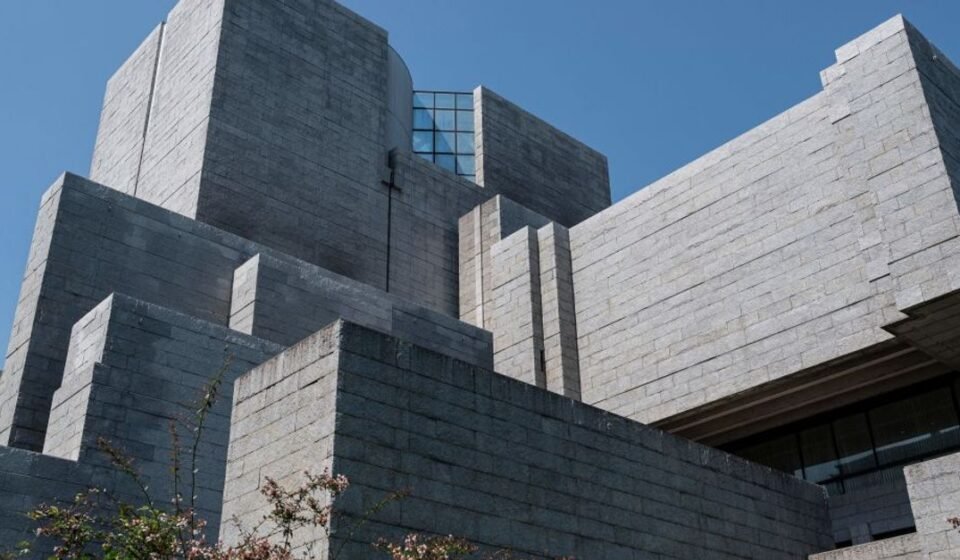

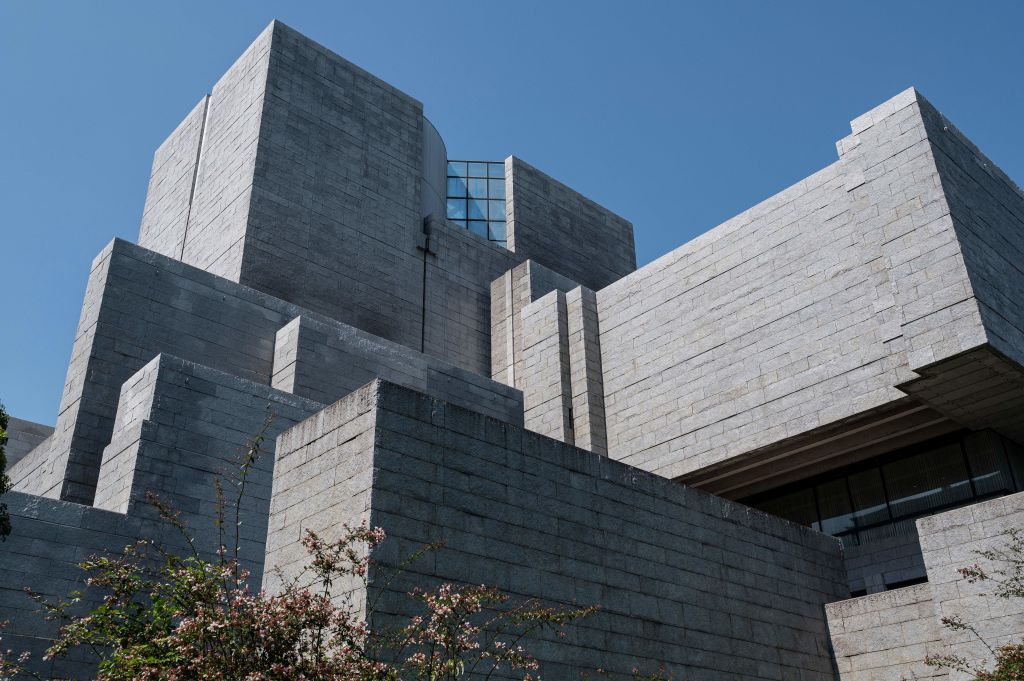
Welcome to SCOTUSblog’s recurring series in which we interview experts on different supreme courts around the world and how they compare with our own. Today’s column focuses on the Supreme Court of Japan. To help me comprehend this apparent bastion of conservatism, I corresponded with Professor David S. Law.
When was the Supreme Court of Japan established?
The SCJ (“Nihon no saikosai”) was established by the 1947 Constitution that Japan adopted at the end of World War II.
Does this court only hear appeals? Are there any cases in which it has original jurisdiction?
Even in theory, it has essentially no original jurisdiction (with a narrow statutory exception for the impeachment of Commissioners of the National Personnel Authority). In practice, it has never exercised original jurisdiction.
Can the Supreme Court of Japan overturn acts of the National Diet? If so, how often does this occur?
It can but does so very rarely, to the point that it can fairly be called the most conservative constitutional court in the world. Over the last 80 years, it has struck down a total of maybe 10 laws on constitutional grounds, depending on how you count repeat litigation (and those were all national laws – it has never struck down any local laws on constitutional grounds). To put that in context, over roughly the same period, the U.S. Supreme Court has struck down over 900 laws on constitutional grounds, and the German Bundesverfassungsgericht [Federal Constitutional Court] has struck down over 600. Other than a couple of courts in Scandinavia, it’s hard to think of any constitutional court in any liberal democracy that has been more passive when it comes to judicial review.
Moreover, the majority of these cases have affected very few people and/or involved trivial laws (e.g., a law limiting the liability of the post office for losing registered mail; a law restricting the ability of pharmacies to operate in close proximity to each other; a law restricting the ability of co-owners of forest land to subdivide their property). The genuinely major exception was the SCJ’s 1976 rejection of electoral malapportionment that grossly favored rural over urban voters (to the benefit of the long-ruling Liberal Democratic Party), but the (LDP-dominated) Diet never fully complied with the decision – which has led to multiple follow-up decisions repeatedly striking down the electoral malapportionment, which have also been flouted.
How many justices are on this court?
Fifteen, divided into three panels (“petty benches”) of five justices each. For exceptionally important cases, all 15 will sit in a plenary session (“grand bench”). Notwithstanding the higher head count, they are overworked. Most of the docket is mandatory, and so the SCJ decides around 10,000 cases per year. (By comparison, SCOTUS doesn’t even receive that volume of cert petitions, and it decides maybe 60 or 70 on the merits per year.) Most of those are summary dispositions, but that doesn’t change the fact that the SCJ has to decide them.
How are these justices selected?
On paper, per the 1947 Constitution, justices are appointed by the emperor on the advice of the cabinet. In practice, there is an informal quota system that allocates seats to different segments of the legal community, namely: the judiciary itself (i.e., career judges), prosecutors, bureaucrats (especially diplomats and/or officials from the Cabinet Legislation Bureau), private attorneys, and law professors. Career judges and prosecutors always constitute a majority of the court. Being informal, those quotas can shift over time, and they have shifted in favor of the career judges and prosecutors (who are viewed as more conservative) at the expense of the private attorneys (who are viewed as more liberal).
For decades, the chief justice has always been a career judge, and in Japan, the chief justice wields exceptional administrative power. He oversees a bureaucracy (the General Secretariat) that decides, among other things, which judges will be assigned to which courts in which parts of the country (in other words, control over where judges live), who will clerk on the SCJ, and so on. Judges are usually reassigned by the General Secretariat every three years or so.
Do the justices serve terms – if so, of what length?
Their terms are not fixed, and in practice, they serve until the mandatory retirement age of 70. (To put that in context, SCOTUS is totally alone in the world in having justices who serve for life: everywhere else, apex court judges serve fixed terms and/or face a mandatory retirement age.) SCJ justices also face retention elections (up-or-down votes) at the first lower-house legislative election following their appointment. (In theory, they face further retention elections every 10 years thereafter, but in practice, they are appointed so close to mandatory retirement age that the subsequent elections do not occur.) No justice in the SCJ’s history has ever come close to being voted out of office (although there is a tendency for the justices at the top of the ballot to get more “no” votes – possibly as a form of protest – so they now randomize the order).
Are cases decided by a simple majority?
Yes.
How is the opinion writer assigned?
Incoming cases are mechanically assigned on a rotating basis to panel members: justice 1 gets case 1, justice 2 gets case 2, and so on. (Unlike a U.S. circuit court panel – and more like the two senates of the German Bundesverfassungsgericht – the SCJ panels are fixed. The justices do not move between panels.) In theory, the justice assigned to draft the opinion (the reporting justice) might not be in the majority, in which case the presiding justice will reassign the opinion. In practice, it is rare for the reporting justice to be in dissent for a variety of reasons, such as strong norms of internal consensus and the homogenizing influence of the law clerks, who are themselves experienced career judges on temporary assignment to the SCJ.
So is there any tradition of concurrences or dissents on the court?
They exist, but not nearly as often as on SCOTUS. Looking just at full decisions on the merits, maybe 5% or less contain any kind of dissenting opinion. However, concurrences can be pointed and read more in substance like dissents. (Majority opinions are unsigned; concurrences and dissents are signed.)
Would you say the Supreme Court of Japan is considered a particularly powerful institution – say, compared to the National Diet or the prime minister?
In theory, yes. It’s a coequal branch of government with the Diet, and so the chief justice has high-profile ceremonial duties such as greeting the emperor. In practice, no. The best-known example of its impotence is the Diet’s continuing noncompliance with its one true landmark decision, the 1976 electoral malapportionment case, but here’s my own favorite example.
True story: Back in 2013, Prime Minister [Shinzo] Abe wanted to sideline the director of the Cabinet Legislation Bureau, a career bureaucrat named [Tsuneyuki] Yamamoto, because Yamamoto would not accommodate a looser interpretation of Article 9 of the Constitution, which expressly prohibits Japan from having armed forces or other “war potential.” Abe did so by appointing Yamamoto to the Supreme Court of Japan. On paper, this was a promotion, but in reality, it sidelined Yamamoto by placing him in a position where he no longer had any real ability to prevent the government from implementing its preferred interpretation of the Constitution.
The fact that the prime minister used appointment to the Supreme Court as a way of sidelining someone whose constitutional law views he didn’t like tells you a lot about the Supreme Court of Japan’s lack of power. Imagine that ever happening in the U.S.
You already touched on this, but what have been some particularly controversial issues decided by the Supreme Court of Japan throughout its history? What were some major issues recently decided by this court?
In truth, there’s really just the bold but failed 1976 electoral malapportionment decision and the follow-up decisions that also failed to stick, even though they arguably walked back a bit from the 1976 decision. The SCJ regularly uses all kinds of devices to avoid sensitive rulings, many of which SCOTUS watchers would quickly recognize – political question doctrine, standing doctrine, extremely deferential standards of review, and so on.
For some reason – optimism? apologism? they need something to talk about? – scholars have for years tried to argue that the SCJ is “finally” turning a corner and taking constitutional rights seriously. (Similarly, commentators often like to claim that Japan is “finally” going to amend its 1947 Constitution, which has still never happened – maybe out of the same sense of boredom, I don’t know.) They will seize on some decision that might sound like it involves some headline principle or subject matter, but it’s usually clear even from the headnote that the decision is too little too late, or very narrow, or has no effect on Japanese society. For example, many scholars pointed enthusiastically to a 2008 decision striking down a statutory provision that distinguished for purposes of citizenship eligibility between illegitimate children of Japanese fathers who acknowledged paternity prior to birth and illegitimate children of Japanese fathers who only acknowledged paternity after birth. If that counts as a landmark case – and the scholars who argue the SCJ isn’t comatose seem to think it is – then you can see how low the bar is.
Another example that gets some play is the SCJ’s 2024 invalidation of a eugenics law under which thousands of disabled or chronically ill persons were forcibly sterilized. The problem is that the statute in question had been passed almost 80 years earlier and repealed almost 30 years earlier. The SCJ had almost 80 years to do something about that law and did nothing. Even after the law was repealed, it still dragged its heels for decades. If that isn’t a day late and a dollar short when it comes to enforcing constitutional rights, then what is?
The United States Supreme Court is often seen as partisan. Does the Supreme Court of Japan have a partisan reputation?
It has a reputation for conservatism. The only question is whether the conservatism in question is “ideologically right” conservatism, or “don’t rock the boat” conservatism. Critics argue the former; defenders argue the latter (and style it as professional craft, care, and caution). The debate persists because both sides are correct: For the SCJ to be conservative in one sense is also to be conservative in the other. And that’s because the conservative LDP has been in power virtually without interruption since World War II (and that in turn is partly because of the electoral malapportionment that, conveniently, the LDP refuses to fix). When all policies have been set (and all judges have been chosen) for decades by the political right, then refusing to push back is conservative in both senses.
This reputation should not be surprising at all. If a right-wing party is always in power for 80 years, it would be surprising – it would defy everything we know about institutional design in political science – for none of that to percolate into the courts. There is simply no opportunity for the left to leave any meaningful imprint on the courts.
What are some common criticisms of this court?
Again, the extreme conservatism (pick your favorite definition) and general unwillingness to take constitutional rights seriously, notwithstanding what optimists and apologists alike may try to argue. Again, though, that behavior is structurally baked in: A court that has been under the thumb of one political party for 80 years and counting is not going to be a court that pushes back a whole lot.
What aspect of the Supreme Court of Japan do you see as superior to that of the Supreme Court of the United States? What aspect of the Supreme Court of the United States do you see as superior to that of the Supreme Court of Japan?
I’m not sure if I’d call it “superior” or just “intriguingly different,” but an intriguing design choice is the SCJ’s clerkship system. Clerks are even more necessary there than here given the backbreaking caseload, but they are not assigned to individual justices, they are picked partly with their substantive expertise in mind, and they often have more judicial experience than some of the justices themselves. The clerks are chosen by the administrative arm of the judiciary from the ranks of the career judiciary, and being picked to clerk for a three-year stint suggests that the judge is on a career fast-track.
Putting aside the obvious benefits in terms of sheer skill and experience, the system has more subtle but also more significant advantages and disadvantages. The good news is the clerks operate in practice as a check on the justices. The less good news for those who would like to see the SCJ actually enforce constitutional rights is the clerks operate in practice as a check on the less conservative justices in particular. The system stifles individuality on the court, as the clerks are beholden to the (conservative) judicial administrators, and they can and do gang up on (beg your pardon – “meet collectively and deliver their collective judgment to”) dissenters and are under no obligation to help them write dissenting opinions.
For those interested in learning more, former Justice Tokuji Izumi wrote a critique of the system in a 2011 symposium issue of the Washington University Law Review about the SCJ (full disclosure, edited by yours truly) that also contains a counterpoint from former Justice Tokiyasu Fujita.
***
David S. Law is the Samuel H. McCoy II Professor of Law, the E. James Kelly, Jr., Class of 1965 Research Professor of Law, Courtesy Professor of Politics, and Affiliated Faculty of the East Asia Center at the University of Virginia. His fieldwork on the Japanese Supreme Court and his time as a visiting professor at Keio University in Tokyo were supported by an International Affairs Fellowship in Japan (Hitachi Fellowship) awarded by the Council on Foreign Relations. He holds a Ph.D. in political science from Stanford, a J.D. from Harvard, and a B.C.L. in European and Comparative Law from Oxford. He is the editor of Constitutionalism in Context (Cambridge University Press, 2022) and co-editor of the Judicial Systems of the World book series (Oxford University Press) and the forthcoming Oxford Handbook of Constitutional Law in Asia (Oxford University Press).
the-supreme-court-of-japan