Trump signs new birthright citizenship order, ballroom dispute likely headed to Supreme Court

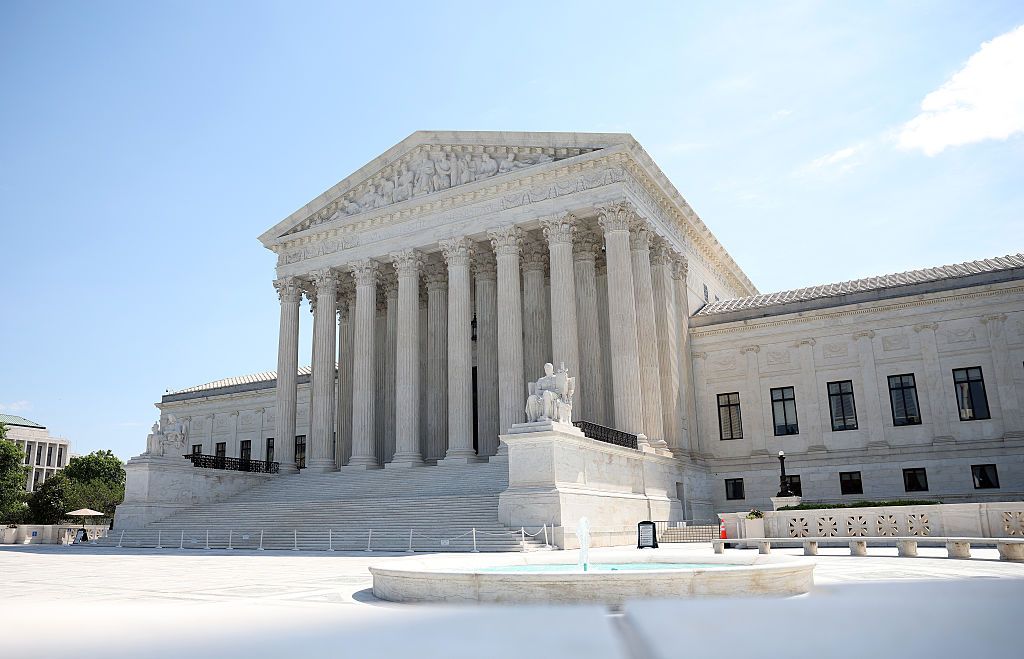
President Donald Trump on Thursday signed an executive order seeking to narrow the availability of birthright citizenship, the current guarantee of citizenship to almost everyone born in the United States. The order, which bears the title “Continuing to Protect the Meaning and Value of American Citizenship,” came just a little over a month after the Supreme Court struck down an earlier order that would have imposed wider restrictions on birthright citizenship. The Aug. 6 order will almost certainly be the subject of litigation soon, with challengers likely to argue that the new restrictions go beyond the very specific exceptions to the general guarantee of citizenship discussed in the Supreme Court’s ruling.
Trump also signed a second order, titled “Ending Birth Tourism,” that targets what the Trump administration has repeatedly characterized as a problem: travel by pregnant women to the United States to give birth so that their children will be U.S. citizens.
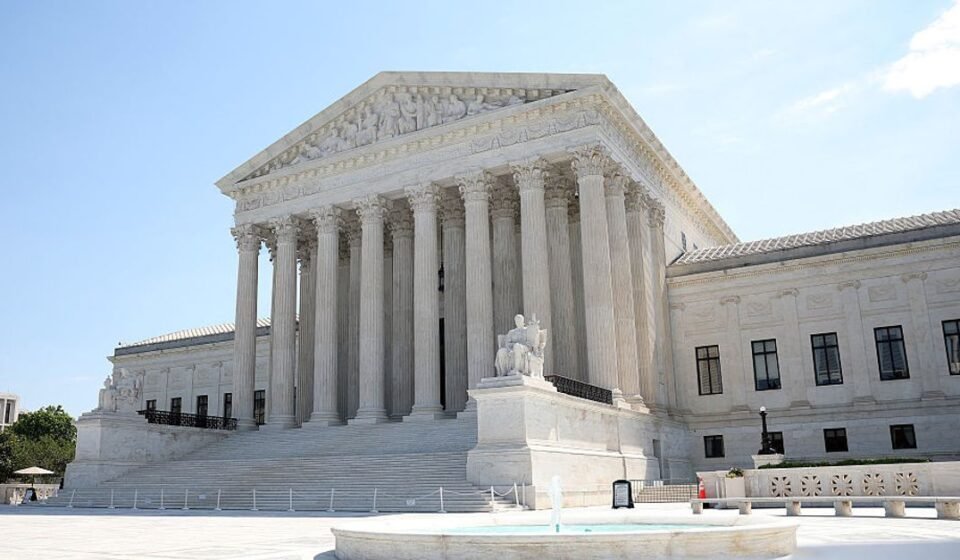
Trump signed the first executive order seeking to restrict birthright citizenship shortly after his inauguration in January 2025. That order barred children whose parents were either undocumented immigrants or only in the United States temporarily from gaining automatic U.S. citizenship. Writing for the majority in Trump v. Barbara holding that the January 2025 order violated the Constitution, Chief Justice John Roberts emphasized that the 14th Amendment’s citizenship clause, which grants citizenship to anyone “born … in the United States and subject to the jurisdiction thereof,” has an expansive sweep. Pointing to a history of birthright citizenship in English law before the American Revolution and early U.S. history, he concluded that the drafters of the 14th Amendment intended to adopt that rule, “with its broad reach and narrow exceptions” for “the children of foreign ministers and members of” some “19th-century Indian tribes.”
The executive order that Trump signed on Thursday would apply not only to the children of ambassadors – that is, “foreign ministers” – but also to the children of a variety of other foreign citizens in the U.S., including other employees at a foreign embassy, employees of a foreign government who are in the United States in their official capacity, and employees of international organizations like the United Nations and the World Bank.
The Supreme Court in the 1898 case of Wong Kim Ark, who was born in California to parents who were Chinese nationals, also indicated that the children of hostile enemies who were occupying the United States would not be eligible for birthright citizenship. Trump’s new order would exclude from birthright citizenship any child whose parent was designated as an “alien enemy” under several federal laws; this would include individuals who were members of the Venezuelan gang Tren de Aragua and the New Irish Republican Army.
Trump’s order would also apply to (among others) the children of parents who “engage[d] in a commercial transaction to ensure that the person’s mother is present in the United States, or a territory of the United States, to give birth” and to children born in a U.S. territory or U.S. territorial waters “where citizenship is not conferred by Federal statute.” Under federal law, babies born in Puerto Rico, Guam, the U.S. Virgin Islands, and the Northern Mariana Islands are currently entitled to U.S. citizenship (while those born in American Samoa are not), although a bill recently introduced in Congress would end birthright citizenship in those territories beginning on Jan. 1, 2027.
Trump’s order focusing on “birth tourism” contends that “[p]articipants in birth tourism schemes abuse” the availability of temporary nonimmigrant visas “to establish a permanent foothold in the United States by securing the advantage of citizenship for their children and then potentially for themselves.” Under current regulations, the State Department already directs consular officers to deny visa applications for persons they have “reason to believe [are] traveling for the primary purpose of giving birth in the United States to obtain U.S. citizenship for their child.”
***
In other news related to the administration, on Friday, the U.S. Court of Appeals for the District of Columbia Circuit upheld a ruling by a federal district court that temporarily blocked construction of the White House ballroom. The panel allowed underground construction to continue, which the federal government argued was necessary for security reasons.
Judges Patricia Millett and Bradley Garcia concluded that the Trump administration likely does not have the power to construct the ballroom. Instead, they wrote, Congress has “full constitutional control over federal property and the funding of its maintenance and development,” and Congress has not authorized any money for the ballroom construction. Moreover, they continued, if the construction is not put on hold and the ballroom is built, it will inflict “irreversible harms” on members of the National Trust for Historic Preservation, which brought the lawsuit challenging the construction, as well as on “the design of President’s Park, the White House, and the surrounding area.”
Millett and Garcia put their order on hold for 14 days to give the Trump administration time to go to the Supreme Court – which, the president has already said, he plans to do.
Judge Neomi Rao dissented. She contended (among other things) that the National Trust for Historic Preservation did not have a legal right to sue, known as standing, and that the president has the power to make improvements to his residence, which likely includes the ballroom.
trump-signs-new-birthright-citizenship-order-ballroom-dispute-likely-headed-to-supreme-court